
If you live in Austin or Central Texas, your yard is dealing with a tough combination: expansive clay soils, sloped lots, and intense rainstorms.
Over time, that can lead to:
In many cases, a retaining wall is not just a design choice. It is a structural solution that helps protect your property.
This guide will help you understand:
A retaining wall is a structural feature that:
Unlike small garden edging, a real retaining wall is built to handle constant side pressure from soil and water and to stay stable for years.
Homeowners in the Austin area commonly use retaining walls to:
If your yard is hilly, uneven, or hard to use, a retaining wall may be the key to making it functional and safe.
The right retaining wall depends on your slope, soil, budget, and design goals. Some of the most common options in Austin and Central Texas include:
These are made from interlocking concrete blocks designed for retaining use.
Pros: Strong, engineered systems, good for curves and tiers, wide range of colors and styles.
Best for: Structural walls, multi-tiered yards, supporting patios or driveways.
Built from chopped stone, limestone, or other natural materials.
Pros: High-end, natural look that fits Central Texas architecture, very durable when properly built.
Best for: Visible front yards, outdoor living areas, projects where appearance is a top priority.
More common on larger or heavily loaded projects.
Pros: Very strong, can be finished or faced with stone.
Best for: Situations with tight space, higher loads, or when an engineer designs the system.
These exist in some older yards, but are less ideal over time in our climate.
Cons: Shorter lifespan, can rot or shift, may not meet modern standards.
Best for: Small, temporary, non-structural applications (and even then, there are usually better options).
A professional evaluation will help decide which material makes sense for your soil conditions, slope, and budget.
In Central Texas, the best time to install a retaining wall is often before serious damage shows up.
It is smart to evaluate retaining wall needs before investing in:
Building the wall first helps:
If you are planning a new patio, turf, or outdoor living project, consider a retaining wall and drainage evaluation before construction starts.
Sometimes the problems have already started. You may need a retaining wall with proper drainage if you notice:
These are signs that the slope and drainage need more than just grading or new plants.
Here are the most common clues on Austin and Central Texas properties.
If parts of your yard are hard to walk on or mow because of the slope, gravity is constantly pulling soil downhill. Over time, that can cause:
Grading might help small slopes, but steeper or taller slopes often need a retaining wall for long-term stability.
Central Texas storms can uncover problems fast. Warning signs include:
This usually means the slope needs structural support, not just more mulch.
When water naturally runs toward your house or garage, it can:
A well-designed retaining wall with drainage can help redirect water away from the structure.
If you want to turn a sloped area into:
A retaining wall is often needed to safely hold back the higher soil and protect the new level area.
In many neighborhoods, one yard sits higher than the next. If the property beside or behind you is higher, their soil can slowly push toward your yard.
A retaining wall can:
These are common red flags on Austin-area properties:
In our climate, these problems rarely fix themselves. They usually get worse and more expensive over time.
Putting off a needed retaining wall can lead to:
Many homeowners end up spending more later on foundation repair, hardscape replacement, and re-landscaping than they would have spent stabilizing the area early.
Grading alone is sometimes enough when:
A retaining wall is usually needed when:
A professional visit will help determine whether grading, a retaining wall, drainage improvements, or a combination is the right solution.
Every project is different, but a few factors affect the cost of a retaining wall in the Austin area:
A properly built retaining wall with drainage can last decades. Cheaper shortcuts—poor base, no drainage, minimal compaction—often lead to early failure, leaning, or collapse, which is far more expensive to fix than doing it right once.
Some small projects can be DIY. Others should not be.
DIY might be reasonable when:
You should hire a professional when:
Retaining walls are one of those projects where failure can mean real damage and safety risks, not just cosmetic issues.
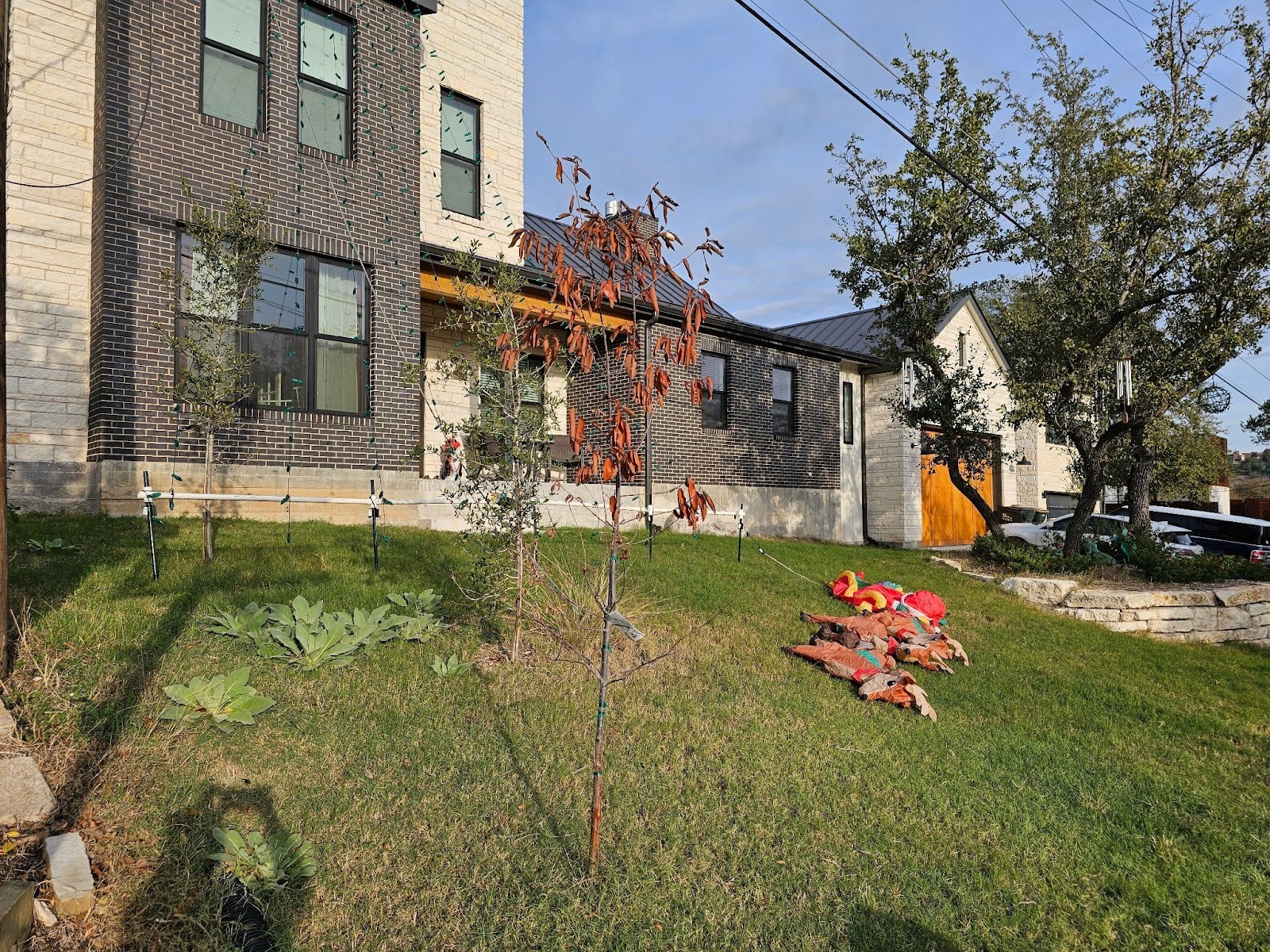
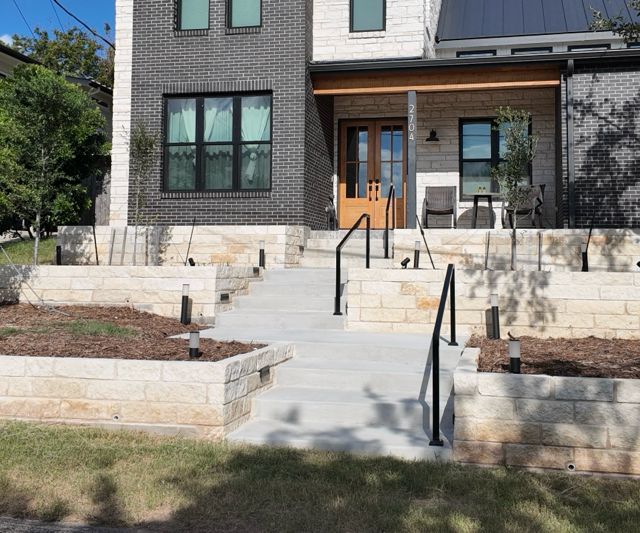
Before: A front yard in North Austin had a steep slope that made it almost impossible to plant anything. The entry felt awkward to walk up and the grade became an eyesore in front of an otherwise beautiful new home.
Professional solution:
Result:A once unusable slope became a stable, structured front yard with a flat, welcoming entry area and controlled water flow directed away from the home's foundation.
Yes—when they are properly designed and installed, retaining walls can:
Because of this, they are often viewed as functional improvements, not just cosmetic landscaping.
In many Central Texas cities and neighborhoods:
Because rules change by city, county, and HOA, it is best to have a professional familiar with local requirements handle the design and installation.
A proper evaluation for an Austin-area retaining wall usually includes:
The goal is a retaining wall that is safe, code-compliant, and built to handle Central Texas soil and weather for the long term.
You may need a retaining wall if:
If you answered "yes" to two or more, it is a good time to schedule a professional assessment.
If you are in Austin, Round Rock, Cedar Park, Pflugerville, Lakeway, or the surrounding Central Texas area and you are unsure whether you need a retaining wall, a short visit can:
Use this article as a guide, then reach out to schedule a retaining wall and drainage evaluation for your property.
Yes. Retaining walls are often necessary to stabilize clay-heavy soils that expand and contract with moisture.
Very. Sloped terrain, grading from development, and heavy rain make them a common structural solution.
Yes—early installation prevents costly damage later.
Properly built retaining walls can last decades.

